11 Most Haunted Places in Michigan: Great Lakes Ghosts
Are you fascinated by the most haunted places in Michigan?
If you look past the Great Lakes, dark forests, and famous cities like Detroit and Grand Rapids, Michigan holds a lot of ghosts.
These are the 11 most haunted places in Michigan:
Michigan Theatre
Jackson

If you’re eager to explore the supernatural side of Jackson, the Michigan Theatre is known for its live performances, as well as its resident ghosts.
Visitors frequently report encounters with a ghostly woman on the balcony and the playful presence of a little girl in the hallways.
Perhaps most chilling is the electronic voice phenomenon (EVP) captured in the ladies restroom, where a woman’s voice whispers, “It’s cold.”
The strategically placed mirrors in the bathrooms are said to be portals to the spirit world- definitely one of the most haunted places in Michigan.
Eloise Asylum
Westland
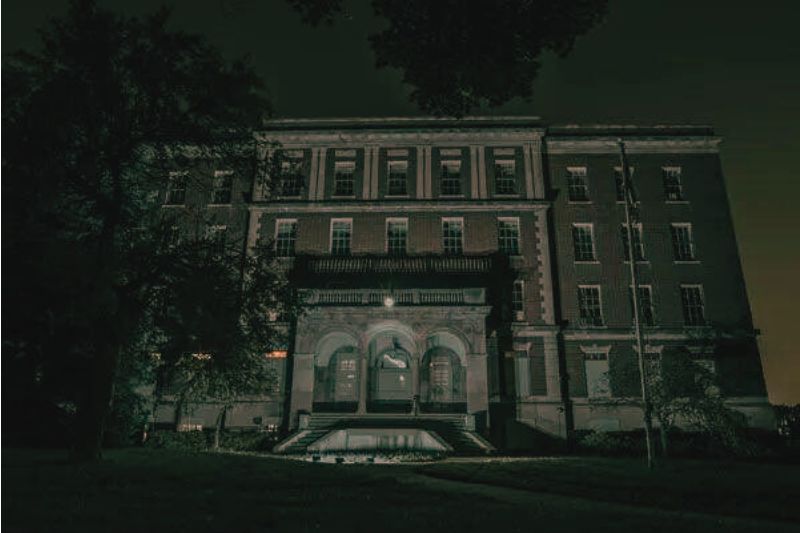
Established in 1839, Eloise Asylum in Westland, Michigan, carries a dark legacy that secures its place among the most haunted places in Michigan.
Initially a psychiatric hospital, it expanded to include a tuberculosis sanatorium and cemetery.
The asylum’s disturbing atmosphere is marked by its history of harsh treatment of patients. These unjust practices have led to numerous reports of paranormal phenomena, such as the sounds of water dripping or hurried footsteps.
Jeff Adkins, co-founder of Detroit Paranormal Expeditions, swears this is one of the most haunted places in Michigan, saying, “You sense someone else is down there, even though you are by yourself.
Potter’s Field
The grounds hold Potter’s Field, where approximately 7,100 individuals were buried anonymously. Potter’s Field served as the final resting place for those who died within Eloise with no next of kin or were otherwise unclaimed.
Visitors to Potter’s Field often report sensations of being watched, sudden drops in temperature, and the sounds of whispering voices coming from near the unmarked graves.
Detroit Sixth Precinct
Detroit
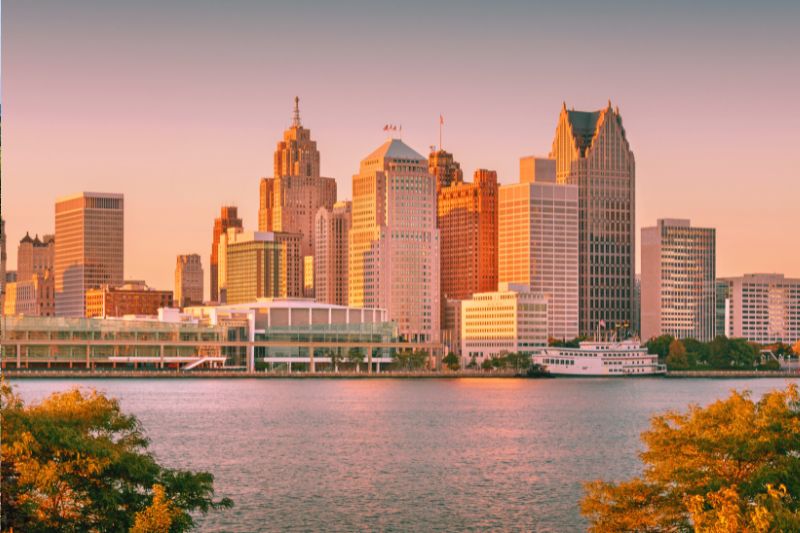
The Detroit Sixth Precinct, an abandoned police station from 1930, encapsulates a shrouded and haunted past that intrigues paranormal enthusiasts.
This precinct radiates spine-chilling energy, with dark tales of death and multiple suicides within its wall, among them including 4 police officers in the basement’s evidence room.
Now a venue for historic tours and ghost hunts, the precinct’s haunted reputation continues to grow, making it one of the most haunted places in Michigan.
Seven Gables Road
Dansville
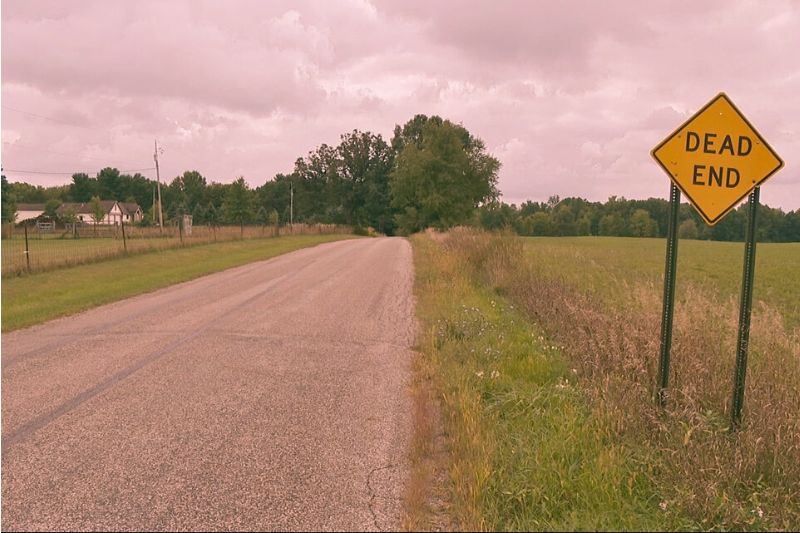
As you take a drive down Seven Gables Road in Dansville, you may just find yourself reciting the local mantra, “last one over, first to die.”
The tale of paranormal activity starts with a witch who was burned by locals. Her spirit is said to haunt the area, especially near a red gate marking the edge of her old home.
Those brave enough to cross the gate risk meeting a deadly force. It’s believed that the last person to leave will die within days.
Legend has it that, years later, an unsuspecting family built a house there. They were soon overcome by insanity when the man killed his family, burned down the house, and then handed himself. However, this has never been confirmed and is believed to be an urban legend.
Michigan Bell Telephone Building
Grand Rapids

In 1907, happy couple Warren and Virginia Randall moved to Grand Rapids for a fresh start. After a railroad accident cost Warren his leg, he spiraled into paranoia and domestic violence.
Despite receiving a wooden prosthetic leg, Warren spiraled into a deep depression. Over time, his mental health continued to decline, and he experienced paranoia and hallucinations. He constantly accused his wife Virginia of having affairs with able-bodied men, and the two began to argue violently, having the neighbors call the cops multiple times.
In 1910, Virginia left Warren after he chased her into the streets with a straight razor, trying to end her life. Warren tried relentlessly to get her back, but she was not interested… until one day, she agreed to meet with him at the now vacant boarding house.
Weeks later, neighbors called the police to investigate an awful smell coming from the building. Police, after breaking through the door of the barricaded room, found the dead bodies of Warren and Virginia. Their investigation determined that Warren had beaten Virginia to death with his wooden leg, then slit his own throat with a straight razor.
Strange Phone Calls from Inside the Building
The house was demolished in 1924, and Michigan Bell’s office building was constructed in its place, but neighbors still heard ghostly shouting matches and wooden legs thumping on the floors.
Then, the phone calls began.
Startled out of sleep, recipients would answer the phone but be met with complete silence at the other end. The issue became so common that residents contacted police to stop what they believed was a group of teens. The police traced the phone lines, but to their confusion, the silent phone calls were traced back to the Michigan Bell building.
Eventually, the calls would stop, but no one ever uncovered who was making them.
Doherty Hotel
Clare

The Doherty Hotel in Clare has been owned and operated by the Doherty family since the 1920s and was a prohibition-era speakeasy serving up alcohol, backroom gambling, and adult entertainment. The hotel was also the site of one of Michigan’s most notorious murders, making it a standout among the most haunted places in Michigan.
The Purple Gang
This hotel was built in 1924 during the prohibition era and served as a speakeasy and gathering spot for the infamous Purple Gang. They were a gang of Jewish men infamous for bootlegging, hijacking, kidnapping, extortion, etc… The Purple Gang originated in Detroit, and famous gangsters like Al Capone would do business with them.
Isaiah Leebove, attorney for the Purple Gang, Jack Livingston, who had lived at the Doherty Hotel for 8 years, Leebove, and Lieutenant Sam (Uncle Sammy) Garfield, the unofficial godfather of Clare, would start Mammoth Oil. The company would grow to be the largest independent producer East of the Mississippi River.
The Conflict
In 1938, Livingston asked Leebove to sell 45 acres of land to the company, but he refused. Tensions boiled over at the Doherty Hotel when, without warning, Livingston shot Leebove, killing him instantly.
After the shocking murder, Livingston calmly surrendered and was later acquitted on the grounds of temporary insanity.
After being out for just short of an hour, Mr. Livingston was acquitted via a plea of temporary insanity and would later die of a drug overdose at the age of 55.
Both Leebove and Helen Doherty, the family matriarch, are said to roam the halls. Guests have heard ghostly whispers to doors that lock and unlock themselves.
Landmark Inn
Marquette
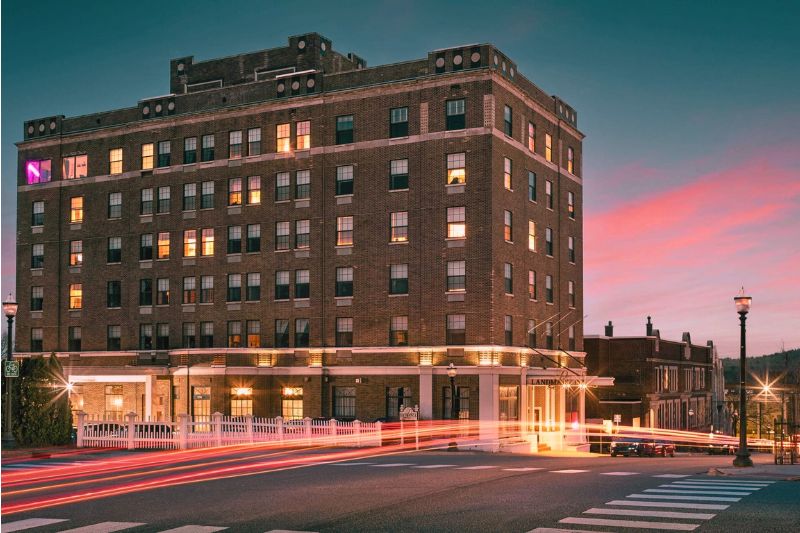
Near the shores of Lake Superior, the Landmark Inn in Marquette is steeped in almost a century of paranormal folklore.
Originally built for wealthy businessmen, the inn is infamous for its tragic history. One of the most notable stories is of a construction worker who killed his girlfriend and hid her body in the basement.
Another haunting centers on the Lilac Room, where a ship worker and a librarian had a doomed romance. The worker died at sea, and the librarian later died of grief in the same room.
Today, visitors report encounters with these spirits, including sounds believed to come from the librarian, who is said to haunt the sixth floor.
Bowers Harbor Inn
Traverse City
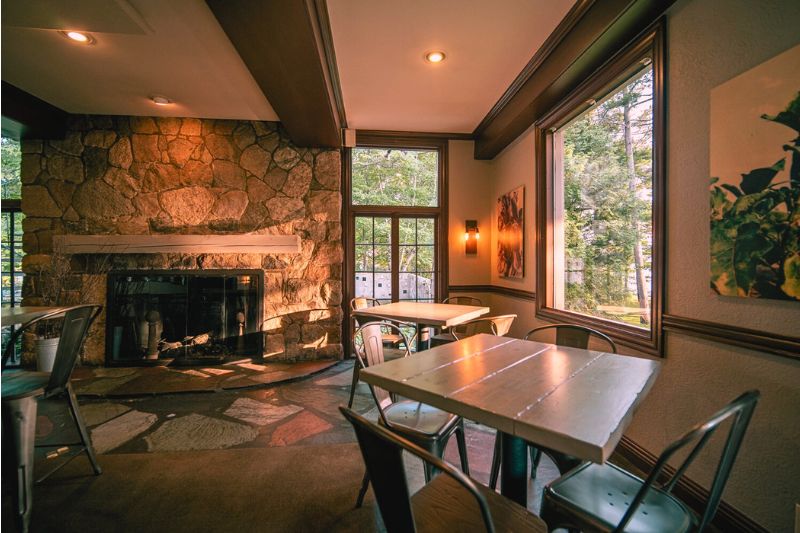
Bowers Harbor Inn, now known as Mission Table and serving as both an events venue and a restaurant, has long been the subject of rumors within the Old Mission Peninsula community.
Its haunted history began in the 1860s with the establishment of a farm by Chester and Anna Hartson, later transferred to a residence for the Stickneys in 1909.
Following a fire in 1927, the property was rebuilt into a grand home designed for social gatherings.
Jennie Stickney’s spirit, known to manipulate objects and appear as a full-bodied ghost out of the corner of the eye, has remained ever since.
Fort Mackinac
Mackinac Island
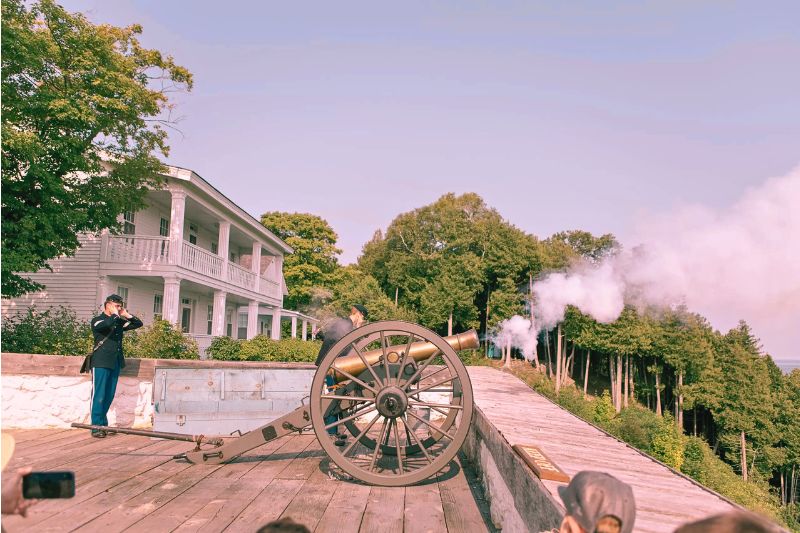
Fort Mackinac, situated prominently on Mackinac Island, is home to a lot of ghosts.
This Revolutionary War-era fort, now a preserved state park, carries a legacy of marital strife that has marked the area with permanent spiritual activity.
Notable paranormal sites include the Post Hospital, now a museum exhibiting 19th-century medical practices. Visual apparitions and electronic voice recordings from spirits across several locations within the fort. Visitors to the Museum claim to have captured images of severed limbs.
The guardhouse is known for inexplicable cold spots, even during peak summer heat. There have also been ghost sightings, including a crying woman in the cemetery and a lone soldier near the Sally Port North Entrance.
Former Holy Family Orphanage
Marquette

The Old City Orphanage, formerly known as the Holy Family Orphanage, opened in 1915 and first housed 60 Native American children and 8 nuns.
It was said that some children were beaten to death, left out in the freezing Michigan winters, or starved to sickness.
A Body on Display
A story, though only partly verified, tells of a little girl who went out to play during a snowstorm and became lost. A nun eventually found her, but the girl had developed pneumonia and later died.
Upset with the girl’s disobedience, the nuns allegedly made an example of her by displaying her body in the lobby. Every child was forced to see her as a warning against going outside in bad weather.
Former residents confirmed that the girl did die, and the nuns held her funeral in the basement, but it’s unconfirmed if her body was really put on display.
The Boy in the Basement
A young boy’s body was discovered in the basement. Many believe that he was either drowned or beaten to death by the nuns. They reported his death as accidental, but nothing was ever confirmed.
Hauntings
Passersby heard the sounds of children crying from the lobby where the little girl’s body was displayed.
One woman who snuck in claimed to see an empty baby carriage roll across the floor. In the basement, where the boy’s body was found, many have seen a glowing green orb. Locals have seen lights moving around inside the building after dark.
Traverse City State Hospital
Traverse City
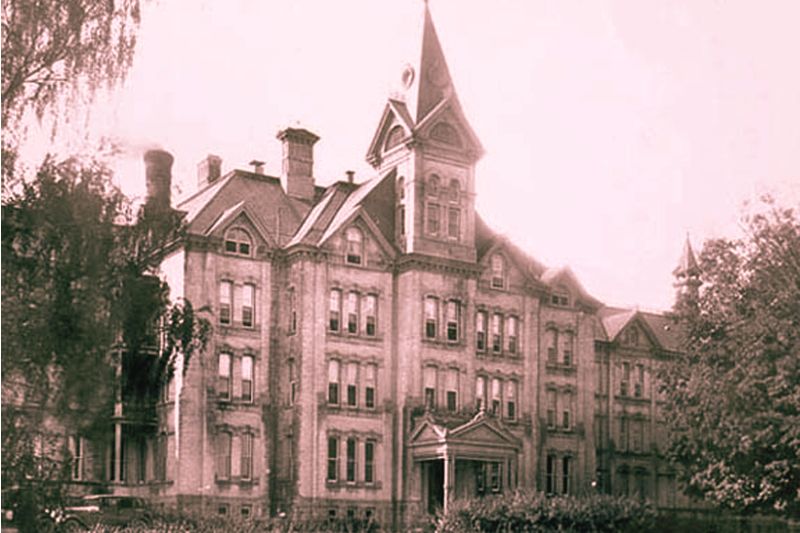
The Traverse City State Hospital, originally the Northern Michigan Asylum, began in 1885 with a groundbreaking approach: “beauty as therapy.” Dr. James Decker Munson believed a serene environment could significantly improve mental health.
This philosophy guided the construction of the facility with elegant architecture and landscaped gardens. Today, this legacy continues in the Grand Traverse Commons, preserving the hospital’s beauty.
However, tragedy is woven into the site’s history. Particularly, a priest is said to have taken his own life in the asylum’s chapel, overwhelmed by dark energies from the despair of patients.
Reports of ghostly figures, unexplained voices, and flickering lights are common, making this a top destination among the most haunted places in Michigan.
Haunt Us
Don’t let your ghost stories go untold. Have you been to any of the most haunted places in Michigan? Share your ghost-hunting experiences in the comments below, visit the forums, and become part of our haunted community.