

12 Most Haunted Places in New York City: Big Apple Evil
Looking for the most haunted places in New York City?
Between the skyscrapers, hip neighborhoods, and Broadway musicals, NYC also has a dark, haunted underside rooted in centuries of history.
Check out the 12 most haunted places in New York City:
The Chelsea
Chelsea

The Chelsea Hotel isn’t just a musical landmark…it’s one of the most haunted places in New York City! This iconic building has hosted creative legends like Jack Kerouac, Bob Dylan, and Janis Joplin, but its ghost stories might be even more famous than its guests. The Chelsea is a must-visit for anyone interested in haunted tourism.
Nancy Spungen’s Ghost
Room 100 is at the center of Punk music legends. Nancy Spungen, girlfriend of Sex Pistols bassist Sid Vicious, was found stabbed to death there in 1978. Sid was initially arrested but claimed he couldn’t remember what happened, leaving her murder a mystery. To this day, Nancy’s ghost is seen in the hotel, wandering the halls and seeking attention, just as she did in life.
Mary: The Titanic Survivor
One of The Chelsea’s most famous spirits is Mary, a Titanic survivor who was overcome with grief after her husband did not survive and hung herself on the fifth floor of the hotel. Visitors often see her ghost near the western end of the building, gazing into a mirror under the archway. This habit has earned her the nickname the Vain Ghost.
Nadia: The Severed Hand Ghost
Nadia’s story is one of pure horror. In 1922, she cut off her own hand with industrial scissors before leaping to her death from a window onto 23rd Street. Her outline is sometimes seen lingering near the windows.
Larry the Hipster Ghost
Larry the Hipster Ghost brings a different energy to The Chelsea’s haunted reputation. Known for his endless chatter, Larry is said to dominate ghostly gatherings, eager to share his insights about the building’s creative energy. Visitors and mediums alike describe his playful yet restless spirit.
The Morris-Jumel Mansion
Washington Heights

Built in 1765, the Morris-Jumel Mansion is the oldest house in Manhattan and one of the most haunted places in New York City. Once a summer retreat for British Colonel Roger Morris, the home is on top of one of Manhattan’s highest points, presenting stunning views of the Harlem River.
Eliza Jumel: The Lady in the Purple Dress
Eliza Jumel, the mansion’s 19th-century mistress, is its most infamous haunting. Known for her scandalous lifestyle, including a controversial marriage to Aaron Burr after her first husband Stephen’s mysterious death, Eliza’s spirit has been seen tapping on walls and windows, her presence demanding attention.
One recounting involves a group of kids who claimed an elderly woman appeared on the second-floor balcony to shush them. When they described her, staff recognized her as Eliza from a portrait—despite no one being on the balcony, which can’t even support the weight of an adult. Visitors also report hearing Eliza through footsteps, voices, and strange knocking throughout.
Other Manifestations:
- The Hessian Soldier: A Hessian soldier (German mercenary who fought for the British during the Revolutionary War) allegedly died on the mansion’s staircase. His manifested form is often seen in the halls.
- The Maid: A maid who jumped from an upper window is also seen, always in fleeting glimpses, never for more than a few seconds.
- Voices: Visitors have reported static electricity pulsing through rooms and unexplained voices. A particularly chilling clip recorded during a paranormal investigation in Burr’s room captured a voice saying something undecipherable. Theories range from “He doesn’t love you” to “They’re gonna laugh at you.”
The Dakota
Upper West Side

The Dakota, an iconic building on Manhattan’s Upper West Side, is as famous for its hauntings as its star-studded history. Built in 1884 across from Central Park, it’s best known as the residence where John Lennon lived and died. Lennon was shot outside its entrance in 1980, and his spirit is one of the many that make The Dakota one of the most haunted places in New York City.
Even while alive, Lennon spoke of The Dakota’s paranormal happenings, describing encounters with the “crying lady ghost,” a ghostly woman in period clothing who roamed the hallways.
After his death, Lennon’s ghost has reportedly been seen near the entrance where he was killed. Musician Joey Harrow described Lennon’s apparition glowing with an unearthly light, while Yoko Ono claimed to see him at their piano, reassuring her: “Don’t be afraid. I am still with you.”
To this day, residents and workers have reported chilling sightings, including a little girl in period clothing waving from lower windows and a figure with the body of a man but the face of a boy. Some have seen the ghost of actress Judy Holliday, who spent her final years in Apartment #77. Painters working in her former home have claimed to see her famous face.
The White Horse Tavern
Greenwich Village
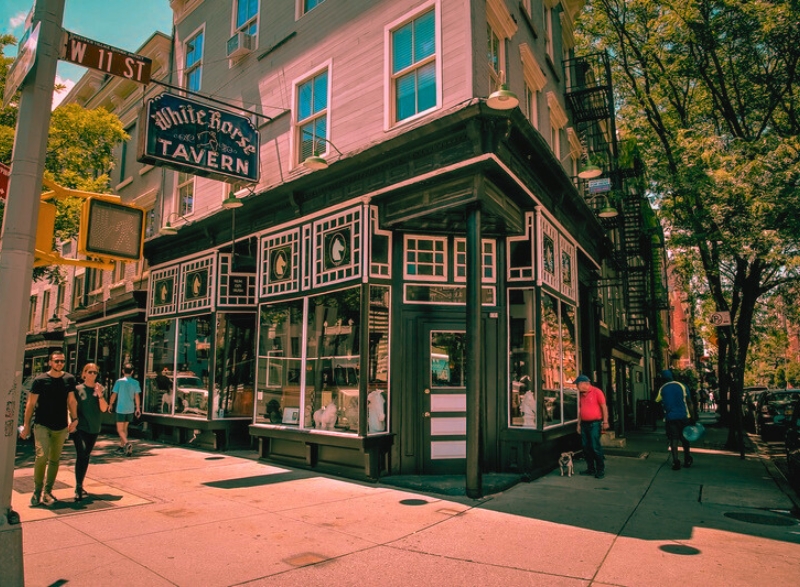
Sitting in the heart of Greenwich Village, the White Horse Tavern has been a New York City institution since 1880, making it the second-oldest continuously operating tavern in the city. Originally a dockworkers’ bar, it gained fame in the 1950s and 60s as a gathering place for creatives, including Dylan Thomas, James Baldwin, Anaïs Nin, and Beat Generation icons like Allen Ginsberg and Jack Kerouac.
Famous Welsh poet Dylan Thomas left an unforgettable mark on the tavern. On November 4, 1953, he reportedly drank 18 shots of whiskey before collapsing. He was taken to St. Vincent’s Hospital, where he died days later of pneumonia, with his alcoholism likely a contributing factor.
Today, his spirit is said to linger near his favorite corner table. Patrons have claimed to see Thomas’s ghost quietly watching over the bar or near his life-sized portrait that hangs beside the table.
Belasco Theatre
Broadway

Broadway’s Belasco Theatre, built in 1907, isn’t just famous for its shows. Its original owner, David Belasco, loved the theater so much that he never left.
Above the theater, Belasco lived in a gothic-style apartment with a window on the floor that allowed him to oversee the stage. Known for wearing a priest-like gown, Belasco’s ghost is often spotted on the balcony or pacing the wings. He’s said to show his disgust with bad performances by moaning from backstage or messing up dressing rooms.
His ghost is sometimes joined by a companion, the Blue Lady, believed to be one of his ex-girlfriends. She appears in a flowing blue gown, pacing the balcony during performances. It’s said that she died tragically after falling down the theater’s elevator shaft due to a malfunction.
Washington Square Park
Greenwich Village
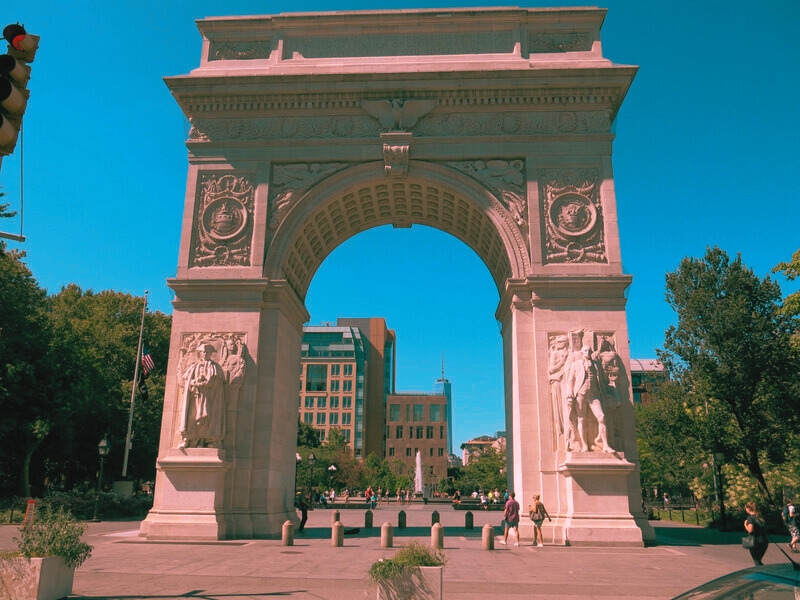
By day, Washington Square Park is one of Manhattan’s busiest green spaces, with chess players, street performers, and coffee-sipping locals enjoying its charm. But beneath its lively surface lies a dark past, making it one of the most haunted places in New York City.
The land originally belonged to the Lenape people, who were displaced when the Dutch West India Company arrived in 1624. By the late 18th century, the area became a Potter’s Field, a burial ground for the poor and criminal. Over 20,000 bodies remain beneath the park, buried in modest wooden coffins.
At the park’s northwest corner stands Hangman’s Elm, a towering English elm thought to be over 300 years old and once used for public executions.
Other hauntings:
- Mysterious Blue Fog: Appears near Hangman’s Elm, causing sudden feelings of panic for those who walk through it.
- Apparitions of children: Ghostly figures in 18th-century clothing are seen playing in the park, seemingly unaware of the world around them.
- Iroquois: Translucent figures in tribal clothing drift beneath the streetlamps, often seen by locals more than tourists.
- Rosie Butler: In 1819, 19-year-old slave Rosie Butler was hanged after being convicted of arson for allegedly setting fire to the house where she worked. Historical records suggest the fire caused little damage, and her harsh punishment is seen as a tragic example of racial injustice. While she was hanged in a nearby Potter’s Field, her spirit lingers near Hangman’s Elm. Visitors report soft crying and sudden chills.
- NYU’s Bobst Library: Adjacent to the park, the library has been the site of multiple suicides. Visitors have reported sensations of being watched, particularly in the atrium and upper floors.
The Merchant’s House Museum
NoHo
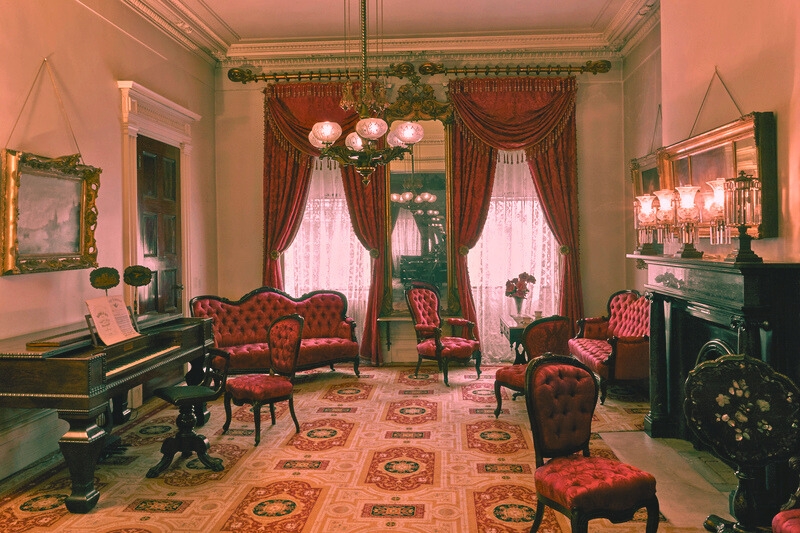
The Merchant’s House Museum, built in 1832, is one of the most haunted places in New York City. This beautifully preserved 19th-century townhouse was home to the Tredwell family for nearly 100 years before becoming a museum in 1936. Since then, the house has gained a reputation for consistent paranormal activity.
Gertrude Tredwell, the youngest of 8 siblings, is the haunting most often associated with the house. Born in an upstairs bedroom in 1840, she spent her entire life in the home, never marrying and dying there in 933 at the age of 93. As the last member of the Tredwell family to occupy the house, many believe Gertrude’s spirit has stayed behind to watch over it.
Reports of strange phenomena have been ongoing for decades. Visitors and staff have described hearing unexplained footsteps and whispers, and the servants’ bells, long disconnected, sometimes ring on their own. Gertrude’s floral perfume has been detected in empty rooms, and some have even claimed to see apparitions resembling members of the Tredwell family.
The museum embraces its haunted history with candlelight ghost tours.
McSorley’s Old Ale House
East Village
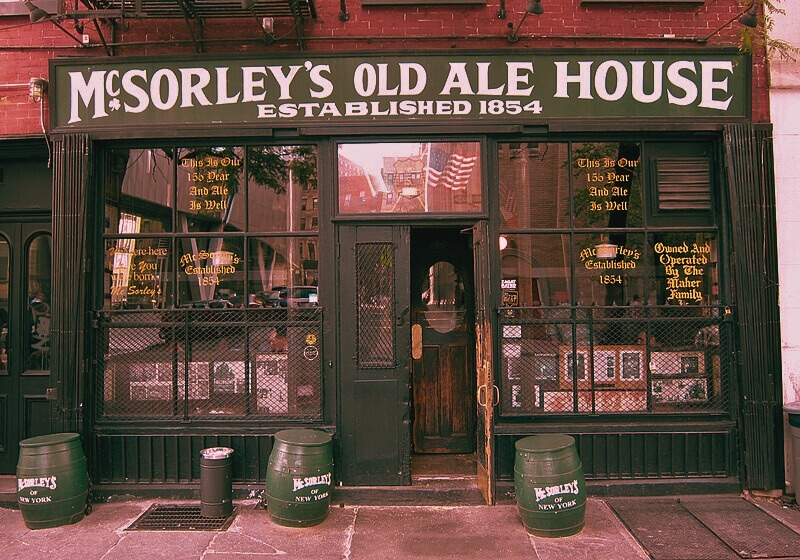
McSorley’s Old Ale House is an iconic Irish saloon, open since 1854. The Ale House is not just one of New York City’s most famous bars—it’s also one of the most haunted places in New York City. With its creaky wooden floors covered in sawdust (a throwback to when it was used to absorb spilled drinks and other messes) and a cash-only rule, McSorley’s hasn’t changed much in its 169-year history.
The walls are crowded with relics, such as a faded wanted poster for John Wilkes Booth and an old photo of the McSorley-Nine, featuring a ghostly blur standing behind the 8 visible figures.
Even weirder, the ashes of up to 7 former patrons are tucked behind the bar near the main door, keeping their spirits close to the pub they loved. Only three of them hold a special place of honor, resting across from Old John’s likeness—a spot reserved for die-hard regulars who spent over 40 years at the bar.
At the heart of McSorley’s mysteries is the dusty gas lamp draped with turkey wishbones, a tradition that dates back to the First World War. Soldiers heading off to the front were given a turkey and ale dinner as a send-off, and they placed the wishbones on the lamp rail for luck, hoping for a safe return. Those who made it back would retrieve their wishbone in celebration. The bones that remain, still thick with dust except for a brief cleaning in 2011, are reminders of the men who didn’t come home.
According to tour guide and CUNY professor Dr. Philip Schoenberg, Harry Houdini’s spirit occasionally shows up in the form of a cat seen in the window. The bar also has a set of handcuffs that belonged to the famous escape artist bolted to the foot rail.
The Ear Inn
Soho

The Ear Inn is a beloved Soho watering hole dubbed one of the most haunted places in New York City. Housed in the historic James Brown House, which dates back to the Revolutionary War, the building has served as everything from a smuggler’s den to a Prohibition-era speakeasy. But it’s the ghost stories that make it truly unforgettable. The most infamous spirit is Mickey, a former sailor and regular patron of the inn.
Mickey’s story is as murky as the East River. One theory claims he staggered into the bar after a long voyage, desperate for alcohol, and drank himself to death right there on his stool. The other account suggests Mickey died just outside the Ear Inn in 1920, hit by a car as he drunkenly stumbled home. Either way, his spirit is tied to the bar.
Mickey’s Manifestations:
- Physical Pranks: Mickey is notorious for harassing female staff and guests. Waitresses report feeling unexpected cold touches, and female visitors claim he’s crawled into bed with them upstairs.
- Drink Stealing: Many patrons have set down full drinks only to find them mysteriously drained moments later. Arguments have even broken out over his ghostly sips!
- Other Oddities: Crayons and butcher paper on the tables have caused EMF meters to spike when guests write notes to him. Electronics, like phones, also glitch when he’s around.
Have you met Mickey? Tell us about it below.
The Manhattan Murder Well
Soho

In the center of modern Soho, the remains of an eerie 200-year-old mystery are hidden inside a COS clothing store on 129 Spring Street.
Known as the Manhattan Murder Well, this relic was at the center of one of the most sensational trials in early American history—and it’s now considered one of the most haunted places in New York City. Today, you’ll find the preserved brick well in the store’s basement, standing unassumingly by the wall.
In December 1799, 22-year-old Gulielma “Elma” Elmore Sands disappeared after leaving her boarding house. She had told her cousin that she was meeting her suitor, Levi Weeks, to elope. Days later, her bruised body was discovered in a well in Lispenard’s Meadow, an area now part of Soho. Levi, a carpenter, was accused of her murder. The trial, People vs. Levi Weeks, was thought of as the first viral murder trial in US history.
Levi’s influential brother Ezra Weeks assembled a powerhouse legal team, including Aaron Burr and Alexander Hamilton. Despite mounting suspicion and stories of cries for help heard near the well, Levi was acquitted after just 5 minutes of jury deliberation. Burr and Hamilton successfully cast reasonable doubt on the evidence and convinced the jury.
The public, however, was outraged by the verdict, and Elma’s murder still remains unsolved. To this day, Elma’s spirit won’t rest. Shoppers and employees at COS have reported hearing distant screams echoing from the well itself.
In the 1990s, when a bistro was renovating the building, workers uncovered the well for the first time in over 150 years. Its pristine appearance startled them as if it had been untouched by time. The atmosphere in the basement was deeply unsettling: glasses shattered on their own, staff felt watched, and a busboy claimed to see a soaked woman in 18th-century clothing.
The restaurant eventually closed, but the well and its haunted history remain.
One if by Land, Two if by Sea
West Village
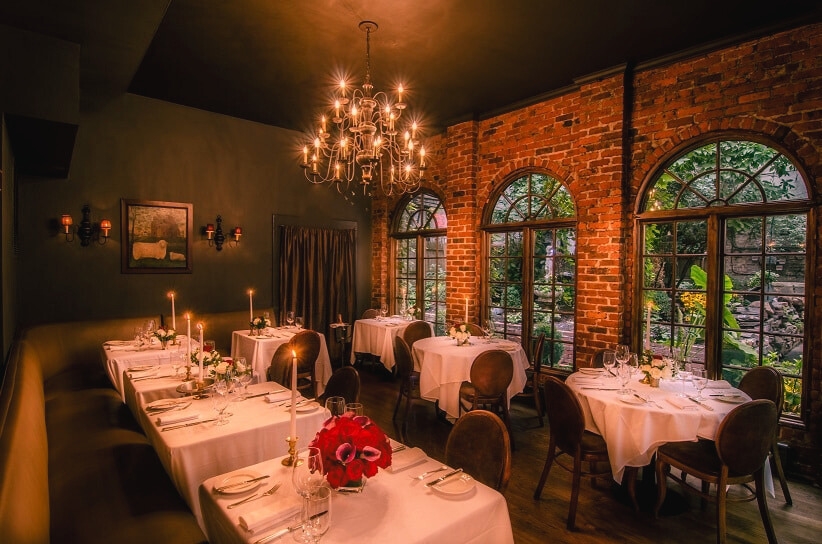
The jewel of West Village, One If by Land, Two If by Sea, has a romantic reputation as one of New York City’s most date-worthy dining establishments. Yet behind the candlelight lies a dark legacy—this former carriage house, once owned by Aaron Burr, is also one of the most haunted places in New York City. With a reported 20 to 25 ghosts calling it home, this restaurant is as spooky as it is historic.
The most famous spirits are Burr himself and his ill-fated daughter, Theodosia. According to legend, Theodosia, on her way to visit her father in New York from South Carolina, was kidnapped by pirates and forced to walk the plank. Though she died at sea, her ghost is said to have fulfilled her promise to reunite with her father by returning to his former home. Women in the bar have mysteriously lost single earrings, a prank attributed to Theodosia. General Manager Rosanne Martino shared the paranormal activity she experienced: “I’ve had…Inexplicable experiences,” she said, recounting moments when picture frames tilted, machinery turned on by itself, and plates flew through the air. Staff members have reported being shoved by unseen hands, and some have even tried to serve ghostly figures who appeared at tables.
Other manifestations include a woman in black, seen descending the staircase where she is thought to have fallen to her death, and a Ziegfeld Follies girl (a chorus performer from a famous early 20th-century Broadway show) whose memory is honored with a candle lit by the staff. A parapsychologist studying the site proposed that ghosts from different eras coexist, are aware of one another, and may even collaborate to creep out diners. Why they would do that is unclear.
Fraunces Tavern
Financial District
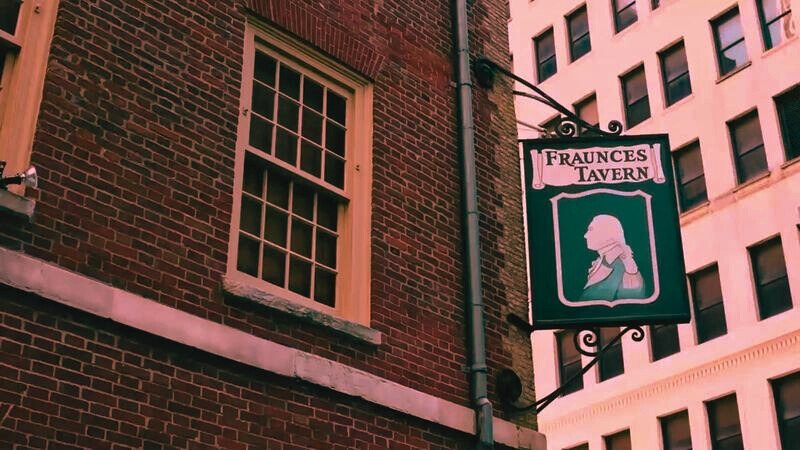
Fraunces Tavern, a cornerstone of Colonial-era history, stands as both a drinking establishment and a portal to the past. Upstairs, the Fraunces Tavern Museum is a shrine to Revolutionary War history.
Opened in 1762 by Samuel Fraunces, the tavern played host to pivotal Revolutionary War figures like George Washington and the Sons of Liberty. Today, it remains a popular bar, museum, and one of the most haunted places in New York City.
In 1798, when the building operated as a boarding house, ballerina Anna Gardie was murdered. Her jealous husband killed her in a fit of rage, stabbing her to death before killing himself. Staff have reported feeling intense sadness in the basement, where the tragic incident occurred. Some have also encountered male apparitions, including one chilling account from a female staff member who fainted after seeing the figure of a man walking toward her on the basement stairs.
Fraunces Tavern’s bloody past doesn’t stop there. In 1975, a bombing orchestrated by the Puerto Rican nationalist group FALN killed 4 people and injured dozens.
To this day, people have reported unexplained phenomena, like doors slamming on their own, keys swaying mysteriously, and a weird pressure on their backs, as if being pushed by unseen hands.
Haunt Us
Don’t let your ghost stories go untold. Have you been to any of the most haunted places in New York City? Share your ghost-hunting experiences in the comments below, visit the forums, and become part of our haunted community.


