

13 Most Haunted Places in North Carolina: Tar Heel Terror
Are you searching for the spookiest spots in North Carolina?
Obscured by charming towns, breathtaking mountain views, and serene beaches, the Tar Heel State harbors a chilling side steeped in centuries of history.
Discover the 13 most haunted places in North Carolina:
The Great Dismal Swamp State Park
South Mills

The Great Dismal Swamp State Park is one of the most haunted places in North Carolina, covering over 112,000 shadowy acres on the border with Virginia. By day, it’s filled with happy hikers and kayakers, but as the sun sets, the swamp transforms.
Manifestations:
- The Underground Railroad Refuge: In the 1800s, this swamp was a hiding place for slaves escaping from plantations. Known as Maroons, they created secret swamp communities; some believe their spirits have left a residual haunting at the State Park.
- Vanishing Explorers: The swamp’s confusing terrain has a reputation for swallowing people whole. Yes, you read that correctly. In 1665, William Drummond led a hunting party into the swamp, which became lost. Days later, Drummond walked out as the only survivor, having accidentally discovered the massive 3,100-acre lake near the swamp’s center that is now named after him. What happened to the rest of his party remains a mystery; though Drummond claims they died on a sinking ship in the lake, no evidence has been found. Public theories include capture by indigenous tribes, injury from the extreme terrain, or a dark spiritual force that caused the men to vanish. This lake would later be named Lake Drummond.
- Lady of the Lake: Long ago, two American Indian lovers were set to marry, but the bride-to-be suddenly died on their wedding day. Depressed, the groom saw her paddling a white canoe across Lake Drummond. Desperate to join her, he followed but drowned in the attempt. Neither was ever seen again. To this day, their spirits are seen across the lake, with the bride’s lantern lighting their way. On still nights, some hear faint whispers or the soft sound of paddles.
- The Moving Graveyard: If you’re completely, helplessly lost in the Great Dismal Swamp, you might find, ah…a graveyard. If you see it, going in the direct opposite direction will put you back on the right track.
- The Tree Lady: On the shores of Lake Drummond stands a mysterious cypress tree, said to be the cursed form of either a deer or a witch fleeing hunters. Some claim the tree seems to watch them.
- Mysterious Lights: The swamp’s ghostly lights are one of its most famous phenomena. Whether they’re the Lady of the Lake’s lantern or something more sinister, no one knows. Ideas like glowing fungi or ignited methane make sense but don’t explain why the lights seem to follow some people and not others.
Stagville Plantation
Durham
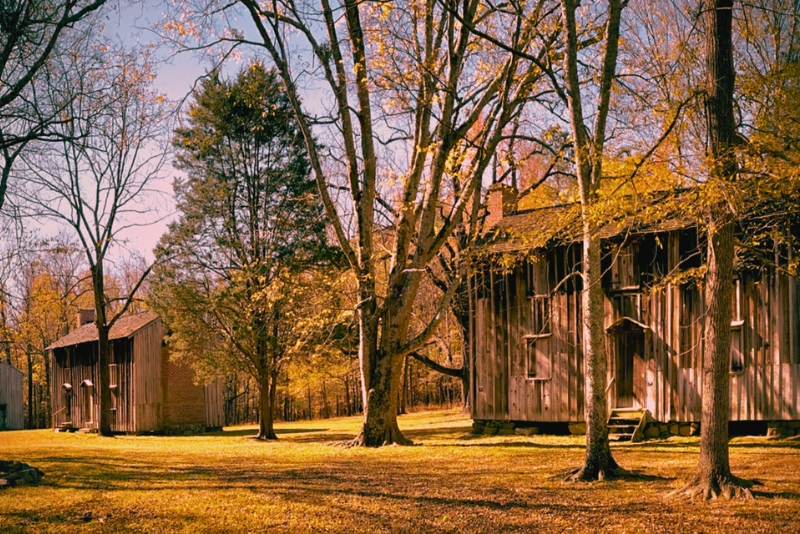
Stagville Plantation, one of the largest plantations in the South, is now a historic site and museum—but it’s also considered one of the most haunted places in North Carolina. Once home to hundreds of slaves, the grounds are known for unexplained phenomena.
Visitors and staff report strange activity in the main plantation house, including mysterious footsteps, strange voices, and locks turning on their own. Over at Horton Grove, where enslaved families once lived, the ghost of a young girl has been spotted wandering the grounds and near the original housing units.
The Great Barn, built entirely by enslaved laborers, has its own set of ghostly tales. Alarms often go off for no reason, and multiple people, including responding fire and sheriff’s department officers, have seen the apparition of an adult African-American man in the loft. The barn remains locked except during guided tours, but that hasn’t stopped the stories from spreading.
Beyond the well-known hauntings, neighbors have reported witnessing strange lights flickering in the windows of the former slave quarters despite the absence of electricity in those buildings. In the surrounding woods, hikers have recounted the feeling of being watched, accompanied by unexplained cold spots even on warm days. Some have also heard distant, mournful singing echoing through the trees, believed to be the residual energy of former slaves.
The Brown Mountain Lights
Morganton

Brown Mountain, a low ridge in Burke County, is straight out of a ghost hunter’s dream and one of the most haunted places in North Carolina. On crisp autumn nights, glowing orbs rise from the mountain, wobble about 15 feet in the air, and then vanish. These lights have been seen by countless people and even recorded.
As for what causes The Brown Mountain Lights, that’s still a mystery.
The Lights have been freaking people out for centuries, and naturally, the legends are just as wild. While no one knows exactly when the lights started appearing, reports go back as far as the 1700s.
Theories include:
- Spirits of women searching for their lost husbands who died in a massive battle between the Cherokee and Catawba.
- Haunted lanterns from that doomed 19th-century search party.
- UFOs (because why not?).
In 1913, a Charlotte Daily Observer article put these mysterious lights on the map, describing a glowing orb that appeared almost every night around 9:30 or 10 PM, baffling the local night fishing club.
Queen Anne’s Revenge
Beaufort
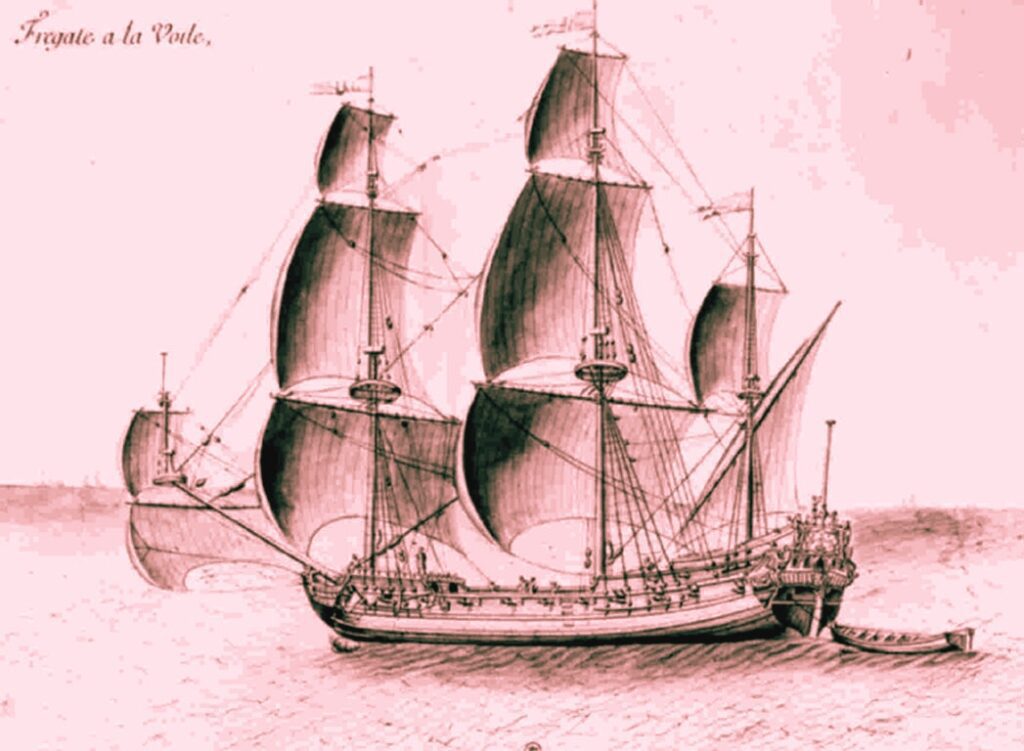
The tale of Blackbeard and his ship, Queen Anne’s Revenge, is legendary. In 1717, Blackbeard took command of the captured French slave ship La Concorde, renaming it Queen Anne’s Revenge. He turned it into a floating fortress with 40 cannons and spent the next year terrorizing ships near North Carolina’s Outer Banks. Beaufort and Ocracoke inlets were his favorite spots to ambush passing vessels.
The story ended brutally in 1718. After a battle with Lieutenant Maynard, Blackbeard was killed, his head chopped off and hung from Maynard’s ship. Legend says his headless body swam 3 laps around the boat before sinking beneath the waves.
Blackbeard’s ghost haunts Teach’s Hole near Ocracoke. Visitors report lights moving underwater, and it is believed that he is still searching for his head. On stormy nights, some claim to hear his voice yelling, “Where’s my head?”
In 1996, the wreck of Queen Anne’s Revenge was found, and by 2011, its identity was confirmed. Artifacts from the ship are now on display at the North Carolina Transportation Museum.
Roanoke Island
Manteo
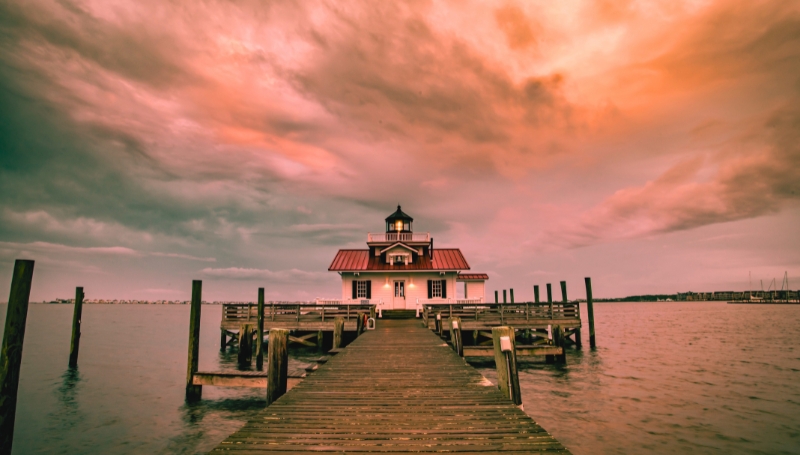
The Outer Banks, a chain of islands off the Atlantic coast, are as haunted as they are beautiful. From Roanoke Island in the north to remote Ocracoke in the South, these islands see millions of visitors every year.
But Roanoke Island is home to one of America’s oldest and greatest mysteries: the Lost Colony. In 1587, over 100 settlers arrived to build the first English settlement in the New World. By the time their leader, John White, returned from England 3 years later, the entire colony was gone.
The only clues were the word “CROATOAN” and the letters “CRO” carved into nearby trees. Among the missing were White’s wife, daughter Eleanor, and granddaughter Virginia Dare, the first English child born in America.
Bad weather cut White’s search short, leaving the mystery unsolved.
To this day, no one knows for sure what happened. Some believe the colonists joined Native tribes, while others think they were massacred. Many locals claim Roanoke Island is haunted by the troubled spirits of the settlers.
The Lost Colony of Roanoke is America’s first great mystery, cementing the Outer Banks as one of the most haunted places in North Carolina.
Lydia’s Bridge
Jamestown
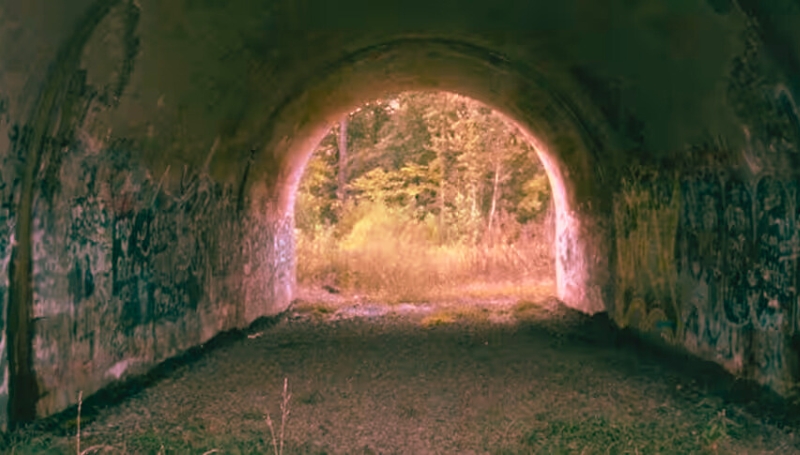
One of North Carolina’s most famous ghost stories is Lydia’s Bridge, a now-abandoned railroad overpass near Jamestown. Tucked away along US-70A, hidden under overgrowth, this spot has been linked to tales of an undead hitchhiker for nearly a century.
The legend begins with a very real tragedy: on December 31, 1923, a young woman known as Lydia died in a car crash on High Point Road near the bridge. Starting in 1924, drivers began reporting encounters with a mysterious young woman in a white dress hitchhiking along the road. She would tell drivers she had been at a party and needed a ride home. Silent and distant throughout the ride, she would vanish as the driver reached the address she gave. Confused, they’d knock on the door, only to meet Lydia’s mother. She explained that her daughter had died in 1923 and showed a photo of Lydia. “You’re not the first to see her,” she’d say, “but I hope one day she finds peace.”
For decades, locals debated the ghost’s identity, but recent research suggests the story may be rooted in the life of Annie L. Jackson. Robin Mitchell Taylor, Annie’s great-niece, uncovered her connection while researching family history. Annie died in a car accident near the bridge, and her middle initial, “L,” could even stand for Lydia. Taylor’s findings aligned with earlier research by Michael Renegar, and together, they’ve created a compelling case: Annie L. Jackson and the ghost of Lydia might be the same person.
The Devil’s Tramping Ground
Bear Creek

The Devil’s Tramping Ground, one of the most haunted places in North Carolina, is a mysterious 40-foot barren circle hidden in the pine woods of Chatham County. For over 300 years, vegetation has refused to grow here, and locals say the Devil himself paces the circle at night, spreading evil across the land. Visitors claim carcasses often surround the circle’s edge, and items left in the circle vanish by morning. Animals seem to sense something too—dogs refuse to enter, barking and growling at the clearing, while others whimper.
Recently, the site has taken on a new twist. A sign renames it the “Chatham County Vortex” and links it to Magdalene Crystal Column energy (a modern idea that ties the circle to divine feminine power and global “Ma-Ray” energy). This energy is said to connect Earth to a web of spiritual, mystical light. This idea reframes the site as a place of positive supernatural forces instead of dark ones.
Crybaby Lane
Raleigh
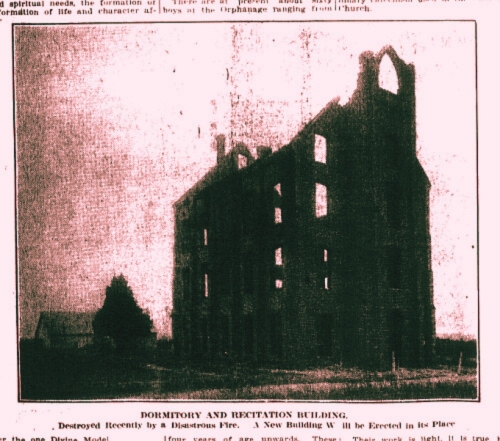
Crybaby Lane in Raleigh, one of the most haunted places in North Carolina, was once home to a Catholic orphanage where priests raised dozens of children, some training for the priesthood. The story turned tragic in 1905 when a fire destroyed the orphanage, killing at least two kids. Legend says the fire was started by escapees from nearby Dorothea Dix Hospital. Seeking revenge for the hospital’s crappy treatment, they set the orphanage on fire, trapping the children inside. By the time help arrived, it was far, far too late.
Allegedly, only two children died, though some claim more or none at all. The conflicting accounts remain unresolved, with researchers citing a lack of evidence. Recently, a student’s discovery of unmarked gravestones hints at possible answers-
The Mystery of the Missing Graves
After the fire, victims were buried in the orphanage cemetery. In the 1980s, N.C. State student Dean Ruedrich discovered around 20 to 30 gravestones, including 3 people who died on Christmas Day. But when Ruedrich returned decades later, the cemetery was replaced by modern campus buildings. Scattered stones and a few markers near Main Campus Drive and Partners Way are all that’s left.
Manifestations
Locals report hearing children’s cries late at night, often accompanied by the smell of sulfur and burning flesh. Visitors exploring the old site claim to see shadowy figures and the ghostly faces of nuns peering from windows that no longer exist.
The Grove Park Inn
Asheville

The Grove Park Inn, one of the state’s most iconic hotels, opened in 1913. Built by Edwin Wiley Grove, the inn was inspired by Grove’s love for Asheville, a town he moved to on his doctor’s advice to seek relief from chronic bronchitis and persistent hiccups. The clean mountain air of Asheville was believed to have health benefits, especially for respiratory conditions.
Grove saw the potential of Asheville’s tourism and, alongside his son-in-law Thomas Seely, constructed the Grove Park Inn to rival the nation’s finest hotels. Over the years, it’s hosted an impressive lineup of guests, including George Gershwin, Harry Houdini, F. Scott Fitzgerald, and Barrack Obama.
The Legend of the Pink Lady
This friendly spirit has been seen around the inn since the 1920s when she tragically fell from the fifth floor of the Palm Court Atrium to the third floor below. While the circumstances of her death remain unclear, her presence is undeniable. She appears as a pink mist or a young woman in a pink ball gown; she loves children, who report the most sightings.
Guests and staff alike have experienced the Pink Lady’s playful side.
She’s known for turning lights and air conditioners on and off, rearranging objects, and even tickling guests’ feet while they sleep. Room 545 seems to be her favorite hangout, though her antics have been reported throughout the inn. The Pink Lady is thought of as a friendly presence.
Historic Bath: The Bath Curse
Bath

Historic Bath, a ghost town near the Pamlico River, was once a rowdy, lawless port, but today, it’s one of the most haunted places in North Carolina. In the 18th century, it was a major stop for ships trading across the Atlantic, both legal and illegal. Pirates loved Bath for its easy access to hidden coves and its relaxed attitude about where goods came from.
Even Blackbeard himself called Bath home, with a house, a wife (or two), and plenty of shady transactions along the waterfront. According to interviews, visitors to Bath report seeing Blackbeard’s ghost wandering the streets or near the waterfront. Sounds of running, clanking chains, and pirate songs are heard near Teach’s Hole, a rumored stash spot.
Whitefield’s Curse
Calvinist evangelist George Whitefield, famous for his booming voice and passionate sermons, wasn’t welcomed when he arrived in town. Known for traveling with his own casket and just being a general weirdo, Whitefield cursed Bath after being mocked by the townspeople.
At first, nothing seemed to happen, but nearby Washington soon became the region’s main port, leaving Bath to fade into obscurity. Whitefield took full credit, bragging that his curse had ruined the town.
Old Salem
Winston-Salem

Old Salem, one of the most haunted places in North Carolina, is a preserved Moravian village dating back to 1766. The Moravians were a group of German-speaking religious migrants who sought to build self-sustaining communities around their faith. Their village in Salem was carefully planned down to the cobblestone. Today, this charming, historical town has been preserved (and haunted).
Andreas Kremser, a shoemaker who lived in the Single Brothers’ House, was known for his mischievous sense of humor, often pulling jokes on his fellow residents, like hiding their tools or slipping random items into their workstations. In 1786, Kremser was digging a cellar when the floor collapsed and buried him alive. Though he was rescued, he died hours later.
Then, strange things began to happen: the sounds of hammering in the middle of the night, shadowy figures, and the sighting of a small man in red, the same color Kremser wore on the day he died. Known as the “Little Red Man,” his spirit is still seen in the Single Brothers’ House, now part of Old Salem Museum & Gardens.
To this day, visitors and employees in Old Salem report hearing slow, deliberate footsteps in empty halls in the town’s buildings, strange figures in period clothing, and sudden, chilling cold spots that come from nowhere.
Paint Rock
Hot Springs
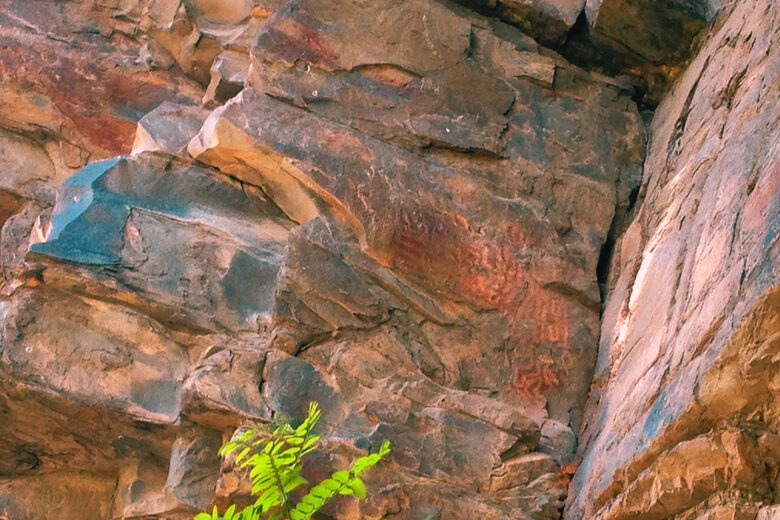
Paint Rock, towering over 100 feet high along a bend in the French Broad River, is one of the most haunted places in North Carolina. This massive rock cliff, covered in ancient pictographs, is over 5,000 years old. The rectilinear designs, etched and painted with local materials, were created by early American Indians on their way to hot springs nearby, which were spiritual for their people and believed to have healing powers.
One of Paint Rock’s creepiest legends is the siren song that lures campers and hikers. The story goes that men camping near the area woke to the sound of hauntingly beautiful singing. They followed the song to the water and saw a beautiful Cherokee woman. Drawn by her beauty, they get closer to her before being dragged into the water and drowning.
Others have seen a Cherokee man wandering the woods around Paint Rock or heard a Cherokee woman singing ancient songs near the river and hot spring areas.
Cape Hatteras Lighthouse
Outer Banks

The Cape Hatteras Lighthouse, one of the most iconic landmarks in the Outer Banks and one of the most haunted places in North Carolina has a history dating back to 1797. Built for $44,000, the original lighthouse was replaced in 1870 due to poor construction and damage sustained during the Civil War. The current structure still watches over the treacherous waters of the “Graveyard of the Atlantic,” an area notorious for shipwrecks.
The lighthouse isn’t just famous for its stunning views—it’s haunted by a mysterious black-and-white ghost cat. For over 150 years, visitors have spotted this phantom feline patrolling the grounds and even climbing the lighthouse steps.
Some say it belonged to a long-ago keeper and stayed behind to protect the tower, while others think it could be tied to the area’s biggest mystery: the Carroll A. Deering.
The Carroll A. Deering was a schooner that crashed into the shore in 1921, its crew gone without a trace, except for 3 cats left behind. Could one of these be the ghostly kitty?
Inside the lighthouse, visitors have also seen Bob, a ghostly man in a yellow raincoat. Known for his subtle, friendly presence, Bob is rumored to be a former innkeeper. If you’re looking, you might find Bob in the lighthouse or near the beach late at night.
Haunt Us
Don’t let your ghost stories go untold. Have you been to any of the most haunted places in North Carolina? Share your ghost-hunting experiences in the comments below, visit the forums, and become part of our haunted community.


